What should we do? · Spiritual paths
Spiritual paths
Silence, meditation, contemplation: centres and groups that can accompany you on a path into the experience of connectedness – from Zen, Vipassana, Tibetan Buddhism and Christian mysticism.
Contents
- Why this page
- What is spirituality? An attempt at an explanation
- What is spirituality? Videos
- Books for further reading
- Poem: On Zen
- Spiritual centres: how we chose
- Find a group near you
- Zen
- Sōtō Zen in Europe and Japan
- Rinzai Zen
- Vipassana and insight meditation
- Mahamudra and Dzogchen
- Christian contemplation
- Non-duality and self-inquiry
- Research on meditation and consciousness
- Not a walk in the park
- More on the topic
- Guest contributions
- ↑ top
Personal
Why this page

You can despair of the world when you feel powerless in the face of injustice and the destruction of the foundations of life. But however insignificant our efforts may be for the course of the world, it still makes a great deal of sense to live as mindfully as possible. For the underlying reason for striving for a way of life that tries to be in harmony with nature, with people and with animals as far as possible is, in the end, love and compassion. However corny that may sound. When we experience the preciousness of all forms of life and our deep connection with them, it no longer matters whether our actions make a difference in the grand scheme of things. If we can achieve something bigger, that is good. But even if our actions may change nothing in the course of the world: just as I care for a flower for its own sake, I can try to treat all things and beings as well as possible – for their own sake.
One path into the experience of connectedness can be silence. Deep, objectless meditation leads to an experience of connectedness, of not being separate. Beyond all religions, denominations and ideologies there is a path to a direct experience of reality that transcends all thinking. Spirituality is not a belief system, not a theory, not an edifice of ideas. Spiritual paths are paths into direct experience beyond conceptual thought. What is experienced there cannot be conveyed, yet the experience itself can happen to anyone. You cannot make such an experience happen; the path to it leads rather through giving up all ideas and certainties. Most people need the guidance and support of a “master” to be able to walk such a path. In the spiritual traditions this has nothing to do with personality cults or dependence. To make it easier to find suitable teachers, this page offers links to various meditation centres.
This page is a translation of the German page prepared with AI assistance. The author’s own words are shown in black, additions and corrections in blue.
Personal
What is spirituality? An attempt at an explanation
Spiritual experience is not only for a small circle of “initiates”. It is the experience of reality at a deeper level. Many people in all ages, cultures and religions have experienced exactly THAT. IT is not outside of what is here and now. Dan Schmidt gave his book the subtitle “Nothing outside the sacred”. That really says it all. Hakuin Zenji says: “All beings are by nature Buddha, as ice by nature is water.”
A student comes to the Zen master and asks whether his practice can lead to enlightenment. The Zen master picks up a tile and polishes it. He says to the student: “No more than I could make a mirror out of this tile.” In doing so, the Zen master does not reject the student and his question at all. Rather, he shows him reality directly.
The quality of spiritual experience as such cannot be described. What is experienced there eludes our rationality completely. You cannot explain it, not even to yourself, and yet you know immediately: yes, this is what really matters, this is reality.
And of course that makes it hard to talk about these things at all. If I say to someone, “Listen, I have something really important, but I can’t tell you what it actually is”, the other person will naturally just look at me like a question mark.
Perhaps you know those 3D pictures in which at first you see nothing but blurred shapes and colours. But if you look at the picture in a certain way, without focusing on details, a 3D figure suddenly emerges. You can take this as an analogy for spiritual experience. The meaning of the picture was always there; you just hadn’t seen it yet while you were looking at the picture in the conventional way. Only the deeper look reveals what the picture means. And once you see it, it is perfectly clear that this was always the meaning of the picture – you just hadn’t seen it. Please take this only as an analogy, because spiritual experience does not show any other forms in reality than the ones that are there. But you recognise the deeper reality, the ONE BEING, in all these forms.
Spirituality has often been associated with withdrawal, with turning away from the world. And that does exist. Anyone on a spiritual path will withdraw completely for certain periods again and again. But of course that is not the goal of the path. From the experience of this unnameable preciousness of all forms of appearance, and of the connectedness – indeed the oneness – in all this diversity, an attitude of respect and compassion arises quite naturally.
Thich Nhat Hanh unfolded the five Buddhist sīlas into the Five Mindfulness Trainings and so developed an ethic that comes directly from the primal experience this is all about. Even if you have not yet experienced it yourself, you can walk the path of practising mindfulness, which in itself becomes a path that opens up to a deeper experience. Mindfulness, compassion and experience in one circle.
Unfortunately, most people cannot remain in this state of experience for long, and then they fall back into their ego structure and their conditioning. You don’t become a better person just because you have had an experience. But over time this new tendency keeps growing, takes up more and more space and leads you to want to meet all beings with respect and compassion. Of course, people who have not had a deeper spiritual experience want that too – but the deep experience is certainly a very strong force for such a compassionate attitude.
Spiritual experience does not confer omniscience. It does not tell us whether to install heat pumps or electric heaters, nor does it offer concepts for migration. The deep experience points us intuitively in a direction of respect and compassion and in this way influences our actions and our decisions.
To watch
What is spirituality? Teachers explain
What do spiritual teachers mean when they speak of spirituality? Here some of them explain it themselves – each in their own words: Eckhart Tolle, Brother David Steindl-Rast, Thich Nhat Hanh, Mooji, Valerie Forstman, Muhō Nölke and the films “Samadhi” and “Liberation” by Awaken the World. The videos open on YouTube.
Eckhart Tolle on Finding Spiritual Liberation
Tolle on the “perennial” wisdom that philosophers, artists and religious teachers have pointed to in all ages – and why most people only relate to it through conceptual thought, mistaking the finger for the moon it points to.
The Journey to Spiritual Awakening: Beyond Thinking
A moment in nature or the unjudging gaze of a baby can free us from incessant thinking for a moment. Tolle calls such moments glimpses of the spiritual dimension – open to everyone, even those not consciously on a spiritual path.
The monk and interfaith scholar on why happiness is born from gratitude – a lesson in slowing down, looking where you are going and, above all, being grateful.
David Steindl-Rast — Anatomy of Gratitude
“Mysticism is the birthright of every human being.” Brother David in conversation on the On Being podcast about gratitude as a full-blooded, reality-based practice – and about his life between Christian and Buddhist monasticism.
Thich Nhat Hanh and Br. David Steindl-Rast on Gratefulness
A Buddhist and a Benedictine monk on their shared work for peace: mindfulness and gratefulness, arriving in the present moment, letting go, forgiving and the power of community.
What is God? | Thich Nhat Hanh answers questions
During a retreat in Plum Village, the Vietnamese Zen master answers the question “What is God?”.
Thich Nhat Hanh on getting out of the prison of past and future and touching reality as it is – “suchness”.
Openness — The First Step in Spirituality
On a walk, Mooji speaks about openness as the first step: finding a space within that is greater than what the mind presents.
Samadhi Movie, 2017 – Part 1 – “Maya, the Illusion of the Self”
The first part of Daniel Schmidt’s free film series “Samadhi” – on awakening, the illusion of the separate self and self-inquiry.
Samadhi Movie, 2018 – Part 2 (It’s Not What You Think)
The second part of the series, with the words of great spiritual teachers from ancient to modern times.
Awakening Mind Part 3, “Liberation” (2025)
“If awakening is the end of seeking, then liberation is the end of the seeker.” Guided by the Zen ox-herding pictures, teachers from Advaita Vedanta, Zen and other traditions speak about what remains when the path itself dissolves.
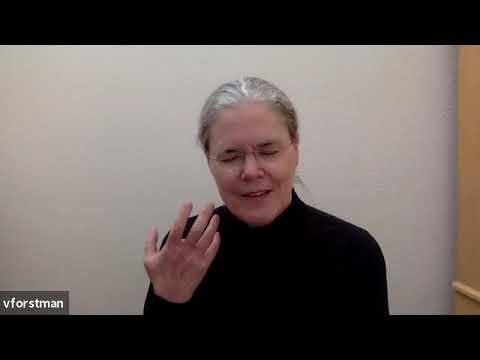
Introduction To Meditation Retreat, Talk One: What is Zen? – with Valerie Forstman
Valerie Forstman, guiding teacher of Mountain Cloud, opens a retreat with the question “What is Zen?”: sitting with things just as they are, without influencing anything – and the Buddha’s first invitation, simply to stop and to see.
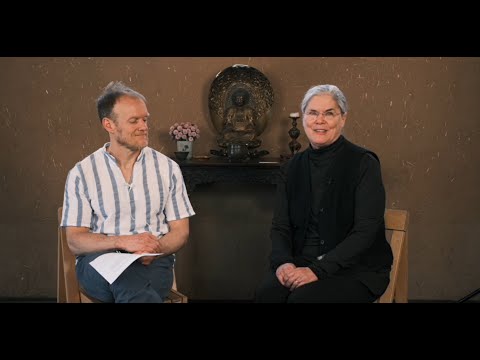
Valerie Forstman in conversation about the Sanbō Zen lineage: its history, its influence on Western Zen, respect for individual expression – and awakening as important, possible and continuous.
Life in a Japanese Zen monastery
Peter Barakan interviews Muhō Nölke, then the German abbot of Antaiji, a monastery deep in the mountains by the Sea of Japan: zazen, self-sufficient community life and the relationship between teacher and student.
What is a Zen Master? An Interview with Muho Noelke
A long, relaxed conversation with the former abbot of Antaiji about Zen practice, what a Zen master is – and what is not.
Direct Transmission of the Truth of Consciousness – Pointers for Self Inquiry/Meditation
The “direct pointing” section of Samadhi Part 4 “Sadhana” as a standalone piece – to be used in meditation or self-inquiry.
To read
Books for further reading
The author’s recommendations.
Most of these books are in German; English editions exist for Thich Nhat Hanh, Eckhart Tolle, Shunryu Suzuki and Daniel Schmidt. Where possible we link to the publisher or to genialokal (independent bookshops in Germany) rather than to Amazon.
Die Welle ist das Meer. Mystische Spiritualität (in German)
Willigis Jäger · Benediktushof shop
“The wave is the sea”: what is mysticism – in practice? The Zen master and Benedictine monk describes the spiritual path and explains what mystical experiences are about.
To the book →Kontemplation – ein spiritueller Weg (in German)
Willigis Jäger · Benediktushof shop
“Contemplation – a spiritual path”: a way out of superficiality and hectic: letting go, opening up to the reality of the divine and immersing yourself in silence.
To the book →Stille finden – und daraus leben (in German)
Silvia Ostertag · Benediktushof shop
“Finding silence – and living from it”: how to find an inner space of silence in the midst of everyday bustle – and what this retreat can do for dealing with daily problems.
To the book →for example “The Miracle of Mindfulness” or “Peace Is Every Step”
Thich Nhat Hanh · local bookshop (genialokal)
The Vietnamese Zen monk shows in simple words how mindfulness can be practised in everyday life – while breathing, walking, washing the dishes.
To the book →The Power of Now
Eckhart Tolle · local bookshop (genialokal)
A classic about living in the present moment and letting go of constantly circling thoughts.
To the book →Zen Mind, Beginner’s Mind
Shunryu Suzuki · local bookshop (genialokal)
Instructions in Zen meditation by the Zen master who founded the San Francisco Zen Center – on the attitude of experiencing every moment like a beginner.
To the book →Samadhi – Nothing Outside the Sacred
Daniel Schmidt · Awaken the World
The book accompanying the “Samadhi” film series: on awakening and the question whether it is not precisely the seeking self that wants to be seen through.
To the book →
On Zen
Daio Kokushi
There is a reality that stands before heaven and earth.
It has no form, let alone a name.
Eyes cannot see it.
It is soundless, not perceptible to ears.
To call it mind or Buddha does not fit its nature,
it would then be like the illusion of a flower.
It is neither mind nor Buddha.
Perfectly still, it illuminates in a wondrous way.
Only to the clear eye is it perceptible.
It is the Dharma, truly beyond form and sound.
It is the Tao, and words have nothing to do with it.
Wishing to draw in the blind,
the Buddha let playful words spring from his golden mouth.
Since then heaven and earth have been overgrown with dense thorny thickets.
Oh, my dear and honourable friends
gathered here:
if you long
to hear the thundering voice of the Dharma,
give up your words, empty your thoughts,
then you will come to recognise the one Being.
English rendering of the German version that has been passed on in Zen practice for decades (German translator unknown).
Selection
Spiritual centres: how we chose
Listed here are paths that have been passed on from teachers to students for centuries and that lead into a deep, direct experience. We have deliberately left out esotericism – astrology, channelling, energy healing and other teachings without foundation – as well as groups with a personality cult and purely commercial offerings. Most centres are in German-speaking countries, and many teach in German; where courses are in English or French, we say so.
For every organisation we checked whether there are reports of abuse, cult-like structures or right-wing, antisemitic or anti-Muslim positions. Some well-known organisations are therefore deliberately missing. Such a check cannot give a guarantee – pay attention yourself to how you feel in a group.
How to recognise a good group
- Teachers name their lineage and who authorised them to teach.
- Costs are stated openly; there are often reductions or donation-based courses.
- You may ask questions, doubt and leave at any time – nobody demands obedience or a break with family and friends.
- There are rules for how people treat each other and a contact point you can turn to if boundaries are violated.
- Nobody promises quick enlightenment, healing or special powers.
There are many other spiritual teachers, paths and traditions, e.g. Hindu, Islamic (Sufi), Jewish and shamanic ones. That they are not mentioned here is due only to the author’s lack of knowledge of these paths.
Do you know a group that belongs here? Write to us via the legal notice (Impressum).
Before you commit to a path, please also read the section “Not a walk in the park” at the end of this page.
Getting started
Find a group near you
The easiest way to begin is with a group that sits together regularly. The umbrella organisations keep directories of their members, and the Willigis Jäger Foundation keeps one of contemplation groups.
German Buddhist Union – centres and groups
all Buddhist traditions · Germany
Search by town and postcode. The DBU has an ethics working group and a reporting office for boundary violations.
To the website →Austrian Buddhist Religious Society
all Buddhist traditions · Austria
Directory of the groups of the legally recognised religious society.
To the website →Swiss Buddhist Union
all Buddhist traditions · Switzerland
Umbrella organisation with a member directory and a code of conduct.
To the website →West-Eastern Wisdom – Willigis Jäger Foundation
Christian contemplation and Zen · all over Germany
Sitting groups all over Germany in the lineages “Cloud of Unknowing” (contemplation) and “Empty Cloud” (Zen).
To the website →
Sitting in silence
Zen
Zen practises silent sitting (zazen): upright, awake, without holding on to anything. Sōtō Zen centres on “just sitting”; Rinzai and Sanbō Zen add kōans – questions that elude thinking.
Zen Association Germany
Sōtō Zen (Deshimaru lineage) · Schönböken (Schleswig-Holstein) and dōjōs
Since 1983. Sesshin (silent retreats of several days), talks and local groups.
To the website →Sanbō Zen International
Sanbō Zen with kōan training · teachers in Munich, Weyarn, Bielefeld, Switzerland and elsewhere
The directory of teachers by country shows where you can practise near you.
To the website →Glassman-Lassalle Zen lineage
Zen with kōan training · Switzerland
“Zen without dogma” in the lineage of Hugo Enomiya-Lassalle and Bernie Glassman: introductions and courses.
To the website →Felsentor Foundation
Sōtō Zen · Rigi near Weggis (Lucerne)
Founded by Zen priest Vanja Palmers and Benedictine monk David Steindl-Rast: zendo, courses and the chance to join community life.
To the website →EIAB – European Institute of Applied Buddhism
Plum Village (Thich Nhat Hanh) · Waldbröl (North Rhine-Westphalia)
Monastic community with retreats (mostly in German, some in English) and free online meditations.
To the website →Plum Village
Thich Nhat Hanh · France (in English)
The mother monastery of the tradition: online courses and a directory of groups worldwide.
To the website →Benediktushof Holzkirchen
Zen and contemplation (Willigis Jäger) · near Würzburg
Zen in the “Empty Cloud” lineage founded by Willigis Jäger – with introductory courses, sesshin, open meditation evenings and online courses.
To the website →Sonnenhof Holzinshaus
Zen and contemplation · southern Black Forest
A house of silence founded in 1992 by Zen master Joan Rieck (Sanbō Zen) and Willigis Jäger. Silent courses of several days for beginners and experienced practitioners; longer stays as a house guest are also possible.
To the website →St. Franziskus Meditation House, Dietfurt
Zen in a Franciscan monastery · Dietfurt an der Altmühl (Upper Palatinate)
Inaugurated in 1977 by Father Hugo M. Enomiya-Lassalle – one of the first houses to offer Zen in a Christian monastery. Zen courses, sesshin, contemplation and open practice evenings.
To the website →Mountain Cloud Zen Center
Sanbō Zen · Santa Fe, New Mexico (USA, in English)
Zen centre in the Sanbō Zen lineage, led since late 2022 by guiding teacher Valerie Forstman, Associate Zen Master: zazen, sesshin, zazenkai, private interviews and many talks and sittings online. Valerie Forstman also leads sesshin in Germany every year. Videos with her talks are in the video section above.
To the website →
Zen in Europe and Japan
Sōtō Zen in France, Austria, Switzerland, England and Japan
For everyone who wants to practise beyond Germany – from city dojos to monasteries that take guests. Many groups in Europe go back to the Japanese master Taisen Deshimaru, who taught in Paris from 1967; Throssel Hole, Daijihi and the Japanese monastery Antaiji belong to other lineages of the Sōtō school.
Sōtō Zen Europe Office
official office of the Japanese Sōtō school · Paris
News, talks and seminars – and pointers to recognised temples and groups throughout Europe.
To the website →Association Zen Internationale (AZI)
Taisen Deshimaru lineage · all over Europe
The association founded by Taisen Deshimaru in 1970, with dojos and temples in many countries; the location search shows groups near you.
To the website →Temple zen de La Gendronnière
AZI · Loire Valley (France)
The AZI’s main temple, founded by Deshimaru, in a large park: retreats, introductions for newcomers and the chance to share daily temple life.
To the website →Kanshoji
Sōtō Zen · Dordogne (France)
A Zen monastery by a forest lake where you can share the daily life of the monks and nuns for a few days – explicitly also without any religious affiliation.
To the website →Ryumon Ji
Sōtō Zen · Weiterswiller (Alsace)
A monastery near the German border with programmes in German and French – from a beginners’ week to living in the community – and dojos in Stuttgart, Nuremberg and Freiburg.
To the website →Zen Dojo Vienna Muigen
Sōtō Zen, Deshimaru lineage · Vienna
Dojo in central Vienna with zazen almost every morning and a monthly introduction for newcomers.
To the website →Daijihi Soto Zen Sangha
Sōtō Zen, Kosho Uchiyama tradition · Vienna
A small community with zazen several times a week on site and online, introductions and two sesshin a year.
To the website →Zen Dojo Zurich Muijoji
Sōtō Zen, Deshimaru lineage · Zurich
A long-established dojo in the old town, since 1975, with daily morning zazen and regular sesshin.
To the website →Kōsetsu-ji and Kobokudo
Sōtō Zen · Jura (Switzerland)
A temple in the Jura countryside and a city dojo in La Chaux-de-Fonds, led by Jikō Simone Wolf, a long-standing student of Deshimaru.
To the website →Throssel Hole Buddhist Abbey
Order of Buddhist Contemplatives · Northumberland (England)
A secluded monastery in the hills of northern England: introductory retreats, festivals and guest stays with the monastic community (in English).
To the website →International Zen Association UK
Deshimaru lineage · London, Bristol, Manchester and other cities
A network of Sōtō groups in England with weekly zazen, introductions for newcomers and several sesshin a year (in English).
To the website →Antaiji
Sōtō Zen, tradition of Kōdō Sawaki and Kōshō Uchiyama · Hyōgo (Japan)
Remote mountain monastery by the Sea of Japan that devotes itself to zazen and to self-sufficient work in the fields and forest. Abbess since 2020: Nakamura Ekō; her predecessor, the German Muhō Nölke, now teaches in Osaka, online and regularly in Germany (videos above). Short-term stays are possible; website in English.
To the website →
Zen with kōans
Rinzai Zen in Germany, Austria, Switzerland, France and England
In Rinzai Zen, sitting is combined with work on the kōan and private interviews with the teacher (dokusan). The practice is often rigorous and demanding.
Hokuozan Sogenji
Shodo Harada Roshi lineage · Asendorf, south of Bremen
A Rinzai monastery in an old farmhouse where Shodo Harada Roshi leads silent retreats of several days (sesshin) several times a year; teaching mostly in English.
To the website →Zen Kreis Hamburg – Linkô Zen Kutsu
Hōkō-ji lineage · Hamburg
An open community with a weekly introduction, zazen, meditation days and sesshin – in German and free of charge.
To the website →Rinzai Zen group Feldbach
Myokyo-ni / Zen Centre London lineage · Feldbach (Styria, Austria)
A small group that sits together on Fridays, with a short introduction – newcomers are welcome.
To the website →Shōgen Zendō
temple recognised by Myōshin-ji · Zurich
A Rinzai temple with zazen early in the morning and in the evening; you can join twice free of charge before you decide.
To the website →Rinzai Zen International Switzerland
Meido Moore Roshi lineage · Ticino, Zug, Zurich
Small dojos in several places and daily online zazen, plus sesshin with the teacher, who comes to Switzerland every year.
To the website →Centre Zen de la Falaise Verte (Shōbō-ji)
Myōshin-ji lineage · Ardèche (France)
A Rinzai temple in the Ardèche valley with zazen, sesshin and archery (kyūdō) – programme in French.
To the website →The Zen Centre – Shobo-an
Daitoku-ji lineage (Myokyo-ni) · London
England’s oldest Rinzai branch: zazen evenings at the Buddhist Society in London, monthly Zen Sundays and sesshin (in English).
To the website →
Seeing clearly
Vipassana and insight meditation
Vipassana means “insight”. You practise precise, calm awareness of breath, body and mind – until it becomes clear how everything comes and goes. Its roots lie in the Theravāda Buddhism of Southeast Asia.
Vipassana as taught by S. N. Goenka – Dhamma Dvāra
U Ba Khin/Goenka lineage · Triebel (Vogtland, Saxony)
Ten-day silent courses, on a donation basis only. The courses are very intensive – please read the note below first.
To the website →Buddha-Haus / Metta Vihara
Theravāda (Ayya Khema) · Allgäu, Munich, Stuttgart
Since 1994: courses, retreats, open evenings and a forest monastery.
To the website →Haus der Stille
Buddhist, open to all traditions · Roseburg near Hamburg
Since 1960, one of the oldest meditation centres in Germany: seminars for beginners and silent retreats.
To the website →Meditation Centre Beatenberg
Vipassana and metta · Beatenberg (Bernese Oberland)
Retreats from three days to four weeks, run by a foundation.
To the website →
The nature of mind
Mahamudra and Dzogchen
Mahamudra and Dzogchen are the deepest paths of practice in Tibetan Buddhism. They lead to recognising the nature of mind itself – open, awake and free of separation.
Tergar Germany, Austria, Switzerland
Mingyur Rinpoche · more than 30 practice groups
A clearly structured path: free taster course, the “Joy of Living” course series, online meditations, a published code of conduct.
To the website →
Mysticism in the West
Christian contemplation
Christianity, too, knows the path into silence: from the Desert Fathers through Meister Eckhart and “The Cloud of Unknowing” to the Jesus Prayer. Contemplation means letting go of all images and concepts and simply being there.
Benediktushof Holzkirchen
Contemplation and Zen (Willigis Jäger) · near Würzburg
One of the largest centres for contemplation and Zen in Europe: introductions, silent retreats, online courses.
To the website →Via Integralis
Christian mysticism and zazen · Switzerland, groups also in Germany
Founded by the Jesuit and Zen master Niklaus Brantschen and Pia Gyger: contemplation days and practice groups.
To the website →Haus Gries – contemplative retreats
Jesus Prayer as taught by Franz Jalics · Upper Franconia
The Jesuit house offers courses for beginners and experienced practitioners on the “Gries Way”.
To the website →WCCM – World Community for Christian Meditation
Christian meditation (John Main) · Germany, Austria, Switzerland
Interdenominational: online meditation in German (and in English via the international WCCM), groups and meditation days.
To the website →Sonnenhof Holzinshaus
Contemplation and Zen · southern Black Forest
Contemplation in Willigis Jäger’s “Cloud of Unknowing” lineage: silent courses with sitting in stillness, work and simplicity.
To the website →
Who am I?
Non-duality and self-inquiry
The question “Who am I?” was at the centre of the teaching of the Indian sage Ramana Maharshi. It leads back behind the sense of “I”.
The website www.awakentheworld.com is a resource for everyone who wants to arrive at a deeper understanding of reality. Our ego structure is a limitation. Genuine spiritual paths can lead out of the narrowness of the self. Through this our mind opens up to more compassion for all beings.
Awaken the World
Non-duality, self-inquiry · Canada (in English)
A non-profit initiative by Daniel Schmidt: free films such as “Samadhi” and “Turiya”, online meetings and retreats.
To the website →
Bridges
Research on meditation and consciousness
What happens in deep meditation? Brain research, psychology and philosophy explore this together with experienced meditators.
Mind & Life Europe
Contemplative research · Switzerland
A network of researchers and practitioners: summer institute, research projects, podcast.
To the website →
Before you set out
Not a walk in the park
A spiritual path is not a walk in the park. It brings us into contact with deeper layers – and that can include phases that are hard for the individual.
Research shows this too: in a survey of 1,232 regular meditators, about one in four reported particularly unpleasant experiences that they attributed to meditation (Schlosser et al. 2019). A study of practitioners and teachers from Theravāda, Zen and Tibetan Buddhism describes 59 kinds of such experiences – from thinking and feeling to the body and the sense of self. Some were brief and mild, others severe and long-lasting. How distressing they became also depended on the relationship with teachers and the community (Lindahl et al. 2017).
So: don’t walk the path alone. Start with shorter courses, talk to your teachers about what you experience, and hold off on long, intensive retreats if you are under heavy psychological strain right now. Good teachers know such phases and take them seriously.
Yamada Kōun Roshi once said:
“Zen is very simple, but not easy.”
I know this all too well, and I believe it is true of all genuine spiritual paths. Time and again it has been a hard path, yet today I am simply grateful for it.
There is no rational answer to the deepest questions. We cannot “know” the truth. But there is something much better and more beautiful: we can experience reality directly. It has always been there and always will be.
That is why I want to encourage everyone to take the path into silence and direct experience.
All links checked on 28 November 2026. · ↑ top
More on the topic
More on the question “What should we do?” (German pages)
- The ethics of sustainability: are there universal values?What can guide us – across cultures and generations
- Facts: is there reliable knowledge?What science knows for sure – and how to tell knowledge from opinion
- Psychology for sustainable behaviourWhy we do so little although we know so much – and what helps
- Sustainability goalsThe 17 goals of the United Nations – and where the world stands
- Political actionVoting, having a say, protesting – what works politically
- Taking action yourself: the checklistWhat you can do in everyday life – and what helps most
- Overview: what should we do?Values, knowledge, goals and ways to act
Join in
Guest contributions
Unfortunately, it is still empty here. But that can change if you write a guest contribution. Perhaps a topic or aspect is missing on this page and you would like to add something. Or you think something is presented wrongly and should be corrected. Then I invite you to write a guest contribution. You can send it to akimuno (at) posteo.de.
However, the following conditions apply for publication:
- The orientation of the contribution matches the values this site stands for.
- The contribution is either based on facts (with links) or presents a scientific – that is, above all, testable and refutable – thesis. Mere opinions about the page will not be published as contributions.
- The contribution is published under your name.
- You wrote the contribution yourself and agree to its publication on this site. I may shorten or decline it.
Contributions in English are welcome. What happens to your data is explained in the privacy policy (section 5, in German).